Source Synchronous Secondary Side Rectifier IC for Electroplating, Power Supply, and Industrial Applications
Find 30 available products featuring the synchronous secondary side rectifier IC for diverse industrial needs. Buyers can compare specifications including output voltage, current capacity, and certifications from verified Chinese manufacturers offering customized solutions.
Key considerations
Products List


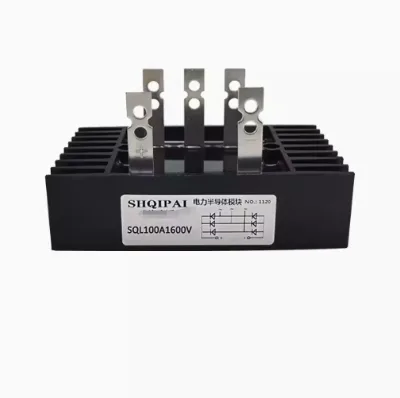


Comprehensive Sourcing Guide
Strategic Sourcing Guide for Synchronous Secondary Side Rectifier ICs
Understanding the Technical Landscape and Integration Levels
When evaluating the market for synchronous secondary side rectifier ICs, buyers must first distinguish between the specific architectural requirements of their power conversion systems. The core keyword implies a focus on high-efficiency rectification in the secondary stage of switching power supplies, where traditional diodes are replaced by active switches to minimize conduction losses. Based on the available product data, the relevant component category includes Unipolar Integrated Circuits designed with LSI (Large Scale Integration) capabilities. These components are often fabricated using Thin Film IC techniques, a method that supports the precise control required for synchronous rectification in high-frequency environments.
The technical specifications observed in the current supply pool indicate a strong alignment with high-frequency switching applications. The data highlights a specific operating frequency of 20kHz, which is critical for determining the switching speed requirements of the rectifier IC. Furthermore, the modulation system is identified as PWM (Pulse Width Modulation), a standard control mode that ensures stable voltage regulation through frequency modulation types. Buyers should verify that the selected IC supports the specific control mode required for their topology, whether it be remote control or local regulation. The waveform quality is also a critical observation; the available data notes a "Smooth Waveform" output, which is essential for reducing electromagnetic interference (EMI) and ensuring clean power delivery to sensitive loads.
The integration level of these components is significant. As LSI devices, they offer a high degree of functionality within a compact footprint, often described by a "Flat" physical shape. This form factor is advantageous for modern PCB layouts where space is at a premium. However, the data also references "Terminal Power Distribution Equipment" and "Parallel Switching Power Supply" connection modes. This suggests that while the IC itself is a small component, its application often involves larger systems where multiple units may be paralleled to increase current capacity. Buyers must ensure that the IC's internal architecture supports the intended parallel operation without instability or current sharing issues.
Compliance Framework and Certification Verification
In the global electronics supply chain, compliance is not merely a regulatory hurdle but a fundamental quality indicator. The product data reveals a robust set of certifications associated with the relevant equipment and components. These include RoHS, ISO, CE, CCC, UL, FCC, CB, and CSA. The presence of these certifications indicates that the supply chain adheres to strict environmental and safety standards. RoHS compliance ensures the absence of hazardous substances, which is a prerequisite for most international markets. ISO certification suggests a standardized approach to quality management, while CE and FCC indicate compliance with European and North American electromagnetic compatibility and safety directives.
The data also lists "Ce/SGS" as a specific certificate, pointing to third-party verification of product quality and safety. For a synchronous secondary side rectifier IC, verifying these certifications is vital because the component operates in a high-stress environment involving high currents and voltages. The "Other" and "Customized" standards noted in the data suggest that while there are baseline international standards, specific applications may require tailored compliance. Buyers should not assume that a generic listing satisfies all regional requirements. Instead, they must request specific documentation proving that the IC batch meets the local regulatory framework of the destination market.
The "CCC" (China Compulsory Certification) and "UL" (Underwriters Laboratories) marks are particularly relevant for products originating from China, which is identified as the primary production location in the data. The "CB" scheme facilitates global acceptance of safety test reports, which can streamline the certification process for end-users. However, buyers must verify that the certification applies specifically to the IC or the specific power supply module containing the IC, as certifications can sometimes apply to the final assembly rather than the individual semiconductor component.
Cost Drivers and Pricing Dynamics
The pricing structure for synchronous secondary side rectifier ICs is influenced by a complex interplay of factors, including integration level, output capacity, and customization requirements. The observed price range in the market spans from $0.04 to $14,180. This vast disparity reflects the difference between individual semiconductor components and complete power supply systems or high-capacity modules. A buyer researching the core keyword must be aware that the lower end of this range likely corresponds to the raw IC or small-scale modules, while the higher end represents complete industrial-grade rectifier systems with high current capabilities.
Volume is a primary cost driver. The Minimum Order Quantity (MOQ) data shows a range from 1 to 4,000 units. For prototype development or low-volume production, an MOQ of 1 allows for flexibility, though the unit cost may be higher. Conversely, high-volume manufacturing can leverage the lower end of the price spectrum by ordering in bulk, potentially reaching the 4,000-unit threshold. The data also indicates that "Customization" is available, which invariably adds to the cost. Customized standard requirements, such as specific output voltages or current ratings, will likely push the price toward the higher end of the spectrum.
The output power and current capabilities are significant cost determinants. The data lists output currents ranging from 20A up to 6,000A and output powers exceeding 500W. Components capable of handling 6,000A or systems designed for hard chrome plating applications represent a different cost tier than those designed for 20A or 100A applications. The "Plywood Case" and "Hard Carton Box" packaging options also suggest that larger, heavier units are being shipped, which impacts logistics costs. Buyers should analyze the total cost of ownership, including packaging and shipping, rather than focusing solely on the unit price.
Typical Applications and Operational Environments
The application scope for synchronous secondary side rectifier ICs is diverse, extending from general power distribution to specialized industrial processes. The data explicitly identifies "Electroplating" as a primary application, with specific mentions of "Hard Chrome," "Nickel Plating," and "Zinc Plating." These applications require stable, high-current DC power with precise voltage control. The "One-way Transmission" attribute suggests these systems are designed for unidirectional power flow, which is typical for rectification tasks.
The operational environment is another critical consideration. The data specifies an operating temperature range of -15°C to 45°C. This range indicates that the components are suitable for controlled indoor environments but may require additional thermal management for outdoor or extreme industrial settings. The "24 Hours at Full Load" operation status confirms that these systems are designed for continuous duty cycles, a necessity for industrial plating lines that run around the clock.
The output voltage and current specifications vary significantly based on the application. For general electronics, the data shows output voltages of 6V, 12V, 15V, and 24V with currents of 20A, 50A, 100A, 150A, and 200A. For heavy industrial applications, the voltage can range from 0-12V or 0-30V, with currents reaching up to 4,000A or 6,000A. This versatility means that a single sourcing strategy must account for multiple product families. Buyers should match the specific application requirements, such as the need for "Smooth Waveform" in sensitive plating processes, with the appropriate IC specifications.
Supplier Evaluation and Product Origin Analysis
Evaluating suppliers for synchronous secondary side rectifier ICs requires a focus on origin, customization capabilities, and logistical reliability. The data indicates that the primary production origin is China, with a specific mention of "Shandong China" as a manufacturing hub. This regional concentration can offer benefits in terms of supply chain efficiency and cost, but it also necessitates rigorous due diligence regarding export controls and quality consistency.
The "Customization" attribute is a key differentiator. Suppliers offering customized solutions can tailor the IC or the power supply module to specific voltage, current, or waveform requirements. This is particularly important for specialized applications like hard chrome plating, where standard off-the-shelf components may not meet the stringent quality needs. Buyers should assess the supplier's engineering capabilities to ensure they can support the customization process without compromising the core functionality of the synchronous rectification.
Logistics and packaging are also part of the supplier evaluation. The data lists "Carton" and "Plywood Case" as packaging types. Plywood cases are typically used for heavy, high-value industrial equipment, suggesting that the supplier has experience in shipping large, sensitive units. The "Terminal Power Distribution Equipment" classification implies that the supplier may be dealing with larger systems rather than just discrete components. Buyers should verify the supplier's ability to handle the specific packaging requirements of their order to prevent damage during transit.
Quality Control and Long-Term Procurement Strategy
Ensuring long-term reliability for synchronous secondary side rectifier ICs involves a comprehensive quality control strategy. The "2 Years" warranty period mentioned in the data provides a baseline for expected product life, but buyers should not rely solely on this metric. Instead, they should implement a rigorous incoming quality inspection process, focusing on the "Operation Status" and "Output Current" stability. The ability to operate at full load for 24 hours is a strong indicator of robust design, but real-world testing under varying load conditions is essential.
The "Parallel Switching Power Supply" connection mode introduces a layer of complexity to quality control. When multiple units are paralleled, the risk of current imbalance increases. Buyers must verify that the ICs have built-in protection mechanisms or that the system design includes active current sharing. The "Frequency Modulation Type" voltage regulating mode also requires careful tuning to ensure stability across the entire load range.
For long-term procurement, buyers should consider the availability of spare parts and the supplier's support infrastructure. The "Customized" nature of some products means that obsolescence could be a risk if the supplier changes their design or discontinues a specific model. Establishing a long-term partnership with a supplier who offers "Remote Control" capabilities and maintains a stable production line in "Shandong China" can mitigate these risks. Additionally, verifying the "Certificate: Ce/SGS" and other certifications annually ensures that the quality standards remain consistent over time.
Comparative Analysis of Product Specifications
To facilitate informed decision-making, the following table summarizes the key technical and operational attributes observed in the current market data. This comparison highlights the diversity of options available for synchronous secondary side rectifier ICs and their associated power systems.
| Attribute Category | Specification Range / Observation | Application Context |
|---|---|---|
| Integration Level | LSI (Large Scale Integration) | High functionality in compact form |
| Technics | Thin Film IC | Precision control for high frequency |
| Conductive Type | Unipolar Integrated Circuit | Efficient rectification |
| Output Frequency | 20kHz | High-frequency switching applications |
| Modulation System | PWM (Pulse Width Modulation) | Stable voltage regulation |
| Voltage Regulating | Frequency Modulation Type | Dynamic load response |
| Output Current | 20A to 6,000A | From consumer electronics to heavy industry |
| Output Voltage | 6V to 30V (or 0-12V) | Versatile power delivery |
| Operation Status | 24 Hours at Full Load | Continuous industrial duty |
| Operating Temp | -15°C to 45°C | Controlled indoor environments |
| Certifications | RoHS, ISO, CE, CCC, UL, FCC, CB, CSA | Global compliance and safety |
| Warranty | 2 Years | Standard reliability assurance |
| Packaging | Carton, Plywood Case | Varies by unit size and weight |
| Origin | China (Shandong) | Primary manufacturing hub |
This table underscores the need for buyers to carefully match their specific application requirements with the available specifications. The wide range of output currents and voltages means that a single sourcing strategy must be flexible enough to accommodate different project needs. By focusing on the technical attributes, compliance, and supplier capabilities outlined in this guide, buyers can navigate the complex market for synchronous secondary side rectifier ICs with confidence and precision.
FAQs
What certifications do these rectifier ICs hold?
The products hold RoHS, ISO, CE, CCC, UL, FCC, CB, and CSA certifications. Some listings also include Ce/SGS certificates to verify quality and safety standards for international compliance.
Can I customize the output specifications?
Yes, customization is available for voltage, current, and standard requirements. Buyers can request tailored solutions such as specific output currents ranging from 20A up to 6000A for industrial applications.
How is the product packaged for shipping?
Items are shipped in Carton, Plywood Case, or Hard Carton Box packaging. The packaging type depends on the unit size, with heavier industrial modules often requiring Plywood Cases for protection.
What is the warranty period for these units?
The standard warranty period provided is 2 Years. This coverage applies to the operational reliability of the high-frequency switch mode rectifiers used in electroplating and power distribution systems.
Which applications are these ICs designed for?
These units are primarily designed for electroplating, hard chrome, nickel, and zinc plating applications. They support one-way transmission and parallel switching power supply modes for stable industrial power delivery.
What is the operating temperature range?
The specified operating environment ranges from -15 to 45 degrees Celsius. This range supports continuous 24-hour operation at full load within controlled indoor industrial settings.
Can the output current reach high levels?
Yes, output currents can reach up to 6000A depending on the specific model. Available models support various current ratings including 20A, 100A, 4000A, and 6000A for heavy industrial needs.